Cities have always evolved through planning, prediction, and sometimes pure guesswork. Developers estimate traffic flow, governments plan infrastructure, architects visualize future neighborhoods — but even with experience, urban planning has often involved uncertainty.
Now, something interesting is changing that process.
Digital twin technology is giving planners and real estate developers a way to create living virtual versions of cities, buildings, and infrastructure systems before major decisions are finalized. And honestly, it’s beginning to change how people think about urban development entirely.
Instead of relying only on static blueprints or simulations, planners can now observe how an area may behave dynamically over time — traffic movement, energy usage, population density, flood risks, sunlight exposure, pedestrian activity, even infrastructure stress.
That’s one reason Digital twin technology smart city real estate planning ko kaise improve kar rahi hai? has become such an important topic in modern urban development discussions.
The technology sounds futuristic, but its practical value is becoming very real.
What Exactly Is a Digital Twin?
The phrase itself sounds complicated, but the core idea is surprisingly simple.
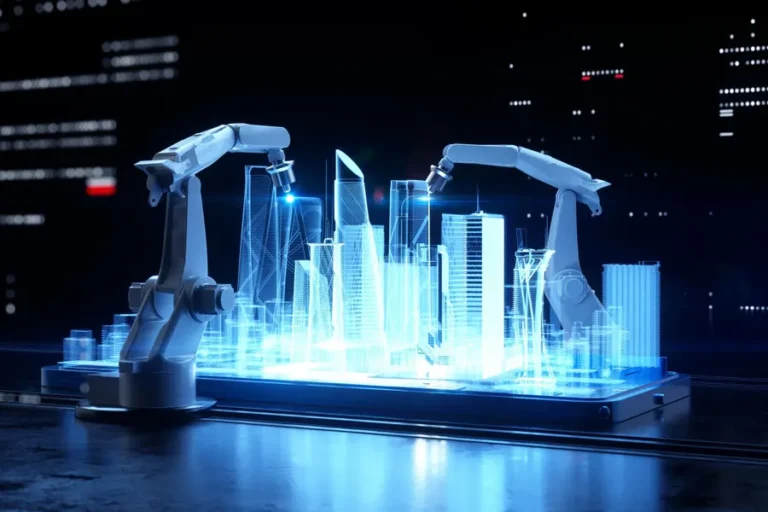
A digital twin is basically a virtual replica of a physical object or environment that updates continuously using real-world data. In smart city planning, this could mean creating digital models of entire neighborhoods, transportation systems, or commercial developments.
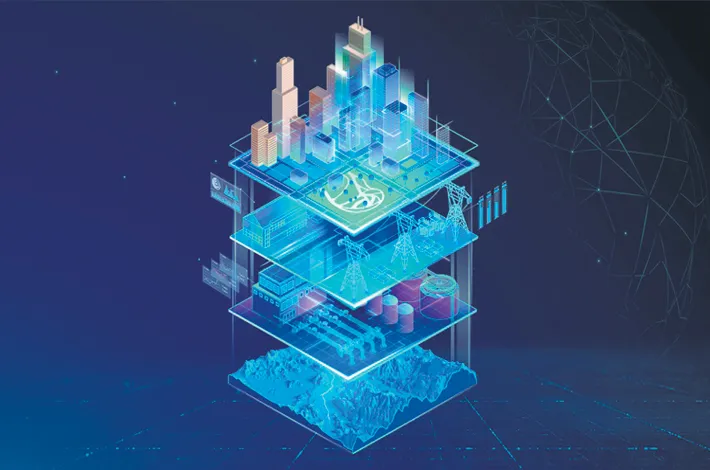
Sensors, IoT devices, satellite data, traffic systems, weather information, and infrastructure monitoring tools all feed live data into these models. The result is a dynamic digital environment that behaves similarly to the real one.
And unlike traditional architectural renderings, these models are interactive.
Planners can test scenarios before implementing them in reality:
- What happens if traffic increases by 30%?
- How will a new residential tower affect sunlight in nearby areas?
- Which zones face flooding risks during heavy rainfall?
- How much strain will new construction place on water systems?
Those answers become easier to visualize before expensive mistakes happen.
Real Estate Decisions Are Becoming More Data-Driven
Earlier, many real estate decisions depended heavily on assumptions and historical trends. Developers studied location popularity, market demand, and nearby infrastructure, then made projections.
But urban environments change quickly now.
Population growth, climate concerns, traffic congestion, and sustainability requirements are making city planning far more complex than before. Digital twins help reduce uncertainty by allowing planners to simulate future conditions more accurately.
For example, developers can analyze how people may move through a commercial district at different times of day. They can predict parking demand, pedestrian congestion, or energy consumption patterns before construction even begins.
That level of visibility changes investment planning significantly.
Smart Cities Need Smarter Infrastructure Planning
One major challenge with rapidly growing cities is coordination.
Roads, drainage systems, power supply, public transport, residential expansion, and commercial development often evolve separately instead of functioning as one connected ecosystem. That fragmentation creates long-term inefficiencies.
Digital twins help connect those systems together visually and operationally.
A city authority can observe how one infrastructure change affects multiple areas simultaneously. Adding a flyover, for instance, may reduce traffic in one zone while increasing congestion elsewhere. A digital model can reveal those consequences early.
This is exactly why Digital twin technology smart city real estate planning ko kaise improve kar rahi hai? is attracting attention from governments, urban planners, and real estate investors alike.
The technology allows cities to become more proactive instead of constantly reacting to problems after they appear.
Sustainability Is Becoming Easier to Measure
Sustainability goals sound great on paper, but implementing them practically is much harder.
Developers today face increasing pressure to reduce environmental impact, improve energy efficiency, and design climate-resilient infrastructure. Digital twin systems help measure those goals more realistically.
For example:
- building orientation can be tested for natural light optimization
- energy consumption patterns can be simulated
- heat island effects can be analyzed
- water management systems can be stress-tested
- carbon impact can be estimated before construction
This creates better long-term planning rather than short-term cosmetic sustainability efforts.
And honestly, with climate-related urban challenges increasing globally, that predictive capability matters more every year.
Homebuyers May Benefit Too
Interestingly, digital twin technology may eventually affect ordinary property buyers as well.
Imagine purchasing an apartment where you can visualize future traffic density, nearby infrastructure development, flood vulnerability, sunlight exposure, or neighborhood growth patterns using live urban data models.
That level of transparency could change real estate decision-making entirely.
Buyers may no longer depend only on brochures, model flats, or sales presentations. They could interact with data-driven simulations showing how an area may evolve over the next decade.
That possibility feels especially important in rapidly expanding urban regions.
Maintenance and Building Management Improve Over Time
Digital twins are not only useful during construction planning. They continue helping after buildings become operational.
Smart commercial buildings already use sensors to monitor:
- electricity usage
- HVAC performance
- occupancy patterns
- water consumption
- equipment health
When connected to digital twin systems, facility managers can predict maintenance issues before failures happen. This reduces operational costs and improves building efficiency over time.
A malfunctioning cooling system, for example, may be detected early through unusual energy behavior patterns inside the digital model.
That predictive maintenance capability is becoming increasingly valuable for large-scale smart developments.
Challenges Still Exist
Of course, digital twin technology is not a magic solution.
Building accurate models requires enormous data collection, sensor integration, and continuous updating. Privacy concerns also exist because smart city systems often involve large-scale monitoring of movement and infrastructure usage.
There’s also the challenge of cost.
Smaller cities and developers may struggle to adopt advanced digital infrastructure initially. And honestly, even the best simulations cannot predict every real-world human behavior perfectly.
Cities remain messy, emotional, and unpredictable places despite technological advances.
The Future of Urban Planning Feels More Interactive
Still, the direction feels hard to ignore.
As cities become denser and infrastructure decisions grow more complex, digital twins offer something planners have always wanted — the ability to test ideas before reshaping real environments permanently.
And perhaps that’s the most fascinating part.
Urban planning is slowly moving away from static blueprints toward living, evolving digital ecosystems that mirror real life almost continuously.
Not perfectly. But closely enough to make smarter decisions possible.
In many ways, digital twin technology is helping cities behave less like disconnected construction projects and more like intelligently managed systems.
And honestly, for the future of urban living, that could make a very big difference.