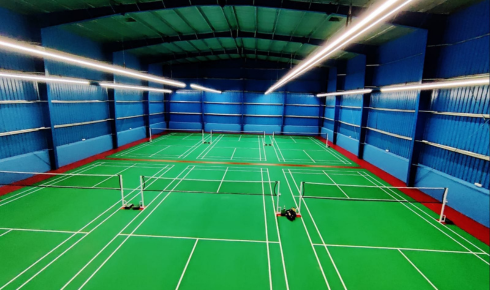
Building a badminton court is a strategic investment that can deliver long-term value for schools, academies, residential societies, and commercial sports facilities. However, one of the biggest challenges is managing the Badminton Court Cost without compromising on quality, performance, and durability.
Many projects either overspend due to poor planning or cut corners on materials and construction—leading to higher maintenance costs later. The key lies in understanding where to invest and how to optimize expenses smartly. With proper Badminton Court Construction, accurate Badminton Court measurement, and the right Badminton Court material, it is possible to build a high-quality court within a controlled budget.
This detailed guide explains all cost components, helping to make informed decisions while ensuring long-term savings.
Understanding Standard Badminton Court Size and Measurement
The foundation of any successful project begins with correct planning. In badminton courts, proper Badminton Court size and Badminton Court measurement are essential not only for gameplay but also for cost efficiency.
Standard Dimensions
- Length: 13.4 meters (44 feet)
- Width (Doubles): 6.1 meters (20 feet)
- Width (Singles): 5.18 meters (17 feet)
In addition to the playing area, extra buffer space is recommended around the court for player movement and safety.
Why Measurement Matters
- Prevents wastage of materials
- Ensures accurate line marking
- Avoids costly redesign or reconstruction
- Meets professional and tournament standards
Incorrect dimensions can lead to improper gameplay and additional costs for correction, making it one of the most critical aspects of planning.
Key Factors That Affect Badminton Court Cost
The overall Badminton Court Cost depends on several interconnected elements. Understanding each component helps in controlling expenses without compromising quality.
1. Base Construction: The Foundation of Durability
The base layer is the backbone of the entire court. A poorly constructed base can lead to cracks, uneven surfaces, and frequent repairs.
Common Base Types:
- Concrete Base:
- Strong and long-lasting
- Ideal for both indoor and outdoor courts
- Slightly higher initial cost
- Wooden Base (Indoor):
- Preferred for professional indoor courts
- Offers better shock absorption
- Requires controlled environment
Cost Impact
A well-prepared base increases upfront cost but significantly reduces maintenance expenses over time. Skipping proper compaction or leveling may seem cost-saving initially but results in higher long-term costs.
2. Badminton Court Flooring: Performance Meets Cost
The choice of Badminton Court flooring directly affects gameplay quality, safety, and durability.
Popular Flooring Options:
- Synthetic Acrylic Flooring: Ideal for outdoor courts
- Wooden Flooring: Premium indoor option
- PU/PVC Flooring: Flexible and cushioned surfaces
Why Acrylic Flooring is Cost-Effective
- Long lifespan with minimal maintenance
- Resistant to UV rays and weather conditions
- Anti-slip surface for safety
- Consistent playing experience
Choosing the right flooring ensures better performance and reduces recurring repair costs.
3. Badminton Court Material: Quality vs Cost
The type of Badminton Court material used plays a major role in determining both initial and long-term costs.
High-Quality Materials Offer:
- Better durability
- Resistance to wear and tear
- Reduced maintenance frequency
- Professional finish
Low-Quality Materials Result In:
- Frequent surface damage
- Poor gameplay conditions
- Higher repair and resurfacing costs
Investing in quality materials may increase upfront Badminton Court Cost, but it ensures long-term savings.
4. Indoor vs Outdoor Court Cost Comparison
The type of court significantly influences the total budget.
Indoor Courts
- Require roofing, lighting, and ventilation
- Higher initial investment
- Controlled environment for professional play
Outdoor Courts
- Lower construction cost
- Require weather-resistant flooring
- Need proper drainage system
Choosing between indoor and outdoor courts depends on usage, budget, and location.
5. Site Preparation and Location
The condition of the site plays a major role in construction cost.
Cost Factors Include:
- Land leveling and excavation
- Soil stability
- Drainage setup
- Accessibility of materials and labor
A site that requires extensive preparation will naturally increase the overall Badminton Court Cost.
6. Additional Features and Accessories
While optional, these features enhance functionality and user experience:
- Lighting systems for night play
- Seating arrangements
- Fencing or boundary walls
- Net systems and poles
These additions should be planned carefully to balance cost and usability.
Estimated Badminton Court Cost Breakdown
Although costs vary by location and specifications, here is a general estimate:
- Basic Outdoor Court: ₹3 lakh – ₹5 lakh
- Standard Acrylic Court: ₹5 lakh – ₹8 lakh
- Premium Indoor Court: ₹8 lakh – ₹15+ lakh
These costs depend on materials, design complexity, and additional features.
How to Save Money Without Compromising Quality
Reducing costs does not mean lowering quality. Smart strategies can help optimize expenses effectively.
✔ Plan Accurately
Correct Badminton Court measurement avoids material wastage and rework.
✔ Choose Durable Flooring
Invest in reliable Badminton Court flooring like acrylic to reduce long-term maintenance.
✔ Use High-Quality Materials
Good Badminton Court material ensures durability and fewer repairs.
✔ Hire Skilled Contractors
Experienced professionals ensure efficient Badminton Court Construction and prevent costly mistakes.
✔ Optimize Design
Avoid unnecessary features that do not add value to gameplay or usability.
Common Mistakes That Increase Badminton Court Cost
Avoiding these mistakes can save significant money:
- Incorrect Badminton Court size and layout
- Poor base preparation
- Low-quality flooring and materials
- Ignoring drainage in outdoor courts
- Hiring inexperienced contractors
These errors often lead to repeated repairs and higher long-term expenses.
Long-Term Cost vs Short-Term Savings
Many builders focus only on reducing initial costs, but this approach often leads to higher expenses over time.
Short-Term Savings:
- Cheap materials
- Minimal base preparation
- Low installation cost
Long-Term Reality:
- Frequent repairs
- Poor performance
- Reduced lifespan
Investing in quality construction ensures better durability, safety, and overall value.
Why Quality Construction is Worth It
A properly built badminton court offers several long-term benefits:
- Enhanced player safety
- Better gameplay experience
- Minimal maintenance costs
- Higher durability and lifespan
- Increased value for sports facilities
Quality Badminton Court Construction is not just an expense—it is a long-term investment.
Conclusion
Building a badminton court requires a balance between cost and quality. Understanding the factors that influence Badminton Court Cost helps in making informed decisions without unnecessary expenses.
By focusing on accurate Badminton Court measurement, choosing the right Badminton Court flooring, and using high-quality Badminton Court material, it is possible to create a durable and high-performance court.
Saving money is not about choosing the cheapest option—it’s about investing wisely. A well-planned and properly constructed badminton court delivers long-term value, better performance, and a superior playing experience, making it a smart and sustainable investment.