Good drinking water doesn’t have to be complicated, but choosing a treatment system sometimes is. Walk into any home-improvement store or search online and you’ll quickly find filters, purifiers, membranes, cartridges, and systems promising cleaner water. The tricky part is figuring out what your household actually needs.
Two common options are a reverse osmosis setup and a filter installed at a single faucet. Both can improve drinking water, but they work differently and are designed for different situations.
Start With Your Water, Not the Equipment
Before choosing a system, think about your water quality. What bothers you about the water right now?
Maybe it has a chlorine taste. Perhaps there’s an unpleasant odor, visible sediment, or concern about dissolved minerals. In some homes, the main issue is simply wanting better-tasting water for drinking and cooking.
These details matter because no single treatment technology is designed to remove everything. A carbon filter may be excellent for certain taste and odor concerns, while reverse osmosis can reduce many dissolved substances.
Testing your water can make the decision much less of a guessing game.
How a Reverse Osmosis System Works
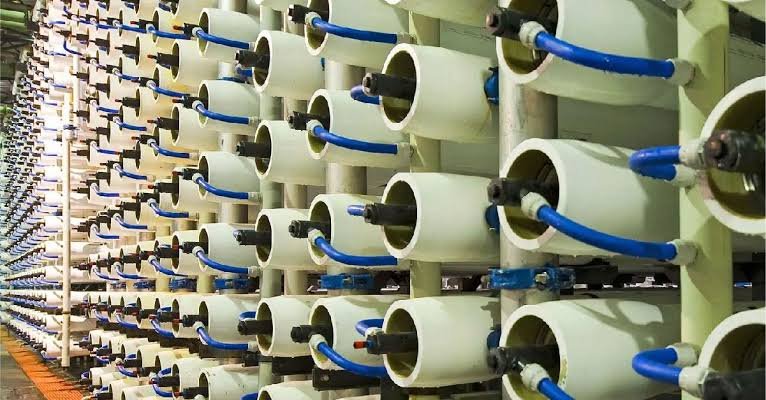
A reverse osmosis system uses pressure to move water through a semipermeable membrane. The membrane allows water to pass while reducing many dissolved substances.
Most residential RO systems use multiple stages. Pre-filters can help protect the membrane, the RO membrane performs the primary separation, and a post-filter may polish the treated water before it reaches the drinking faucet.
Because RO can reduce a broad range of dissolved substances, it’s often chosen when homeowners want more extensive treatment than basic filtration provides.
However, there’s a trade-off. RO systems typically produce some wastewater during operation, and the membrane and filters require regular maintenance. Efficiency varies by system, so it’s worth asking about the amount of water used and the system’s recovery rate.
When a Single-Faucet Filter Makes Sense
A single faucet filter system can be a simpler choice when you mainly want to improve water at one location.
For example, perhaps the kitchen tap is where your family gets drinking and cooking water, while the rest of the home’s water is perfectly acceptable. In that situation, treating the entire house may be unnecessary.
Depending on the filter technology, a faucet-specific system can target certain contaminants, improve taste and odor, or reduce sediment. Installation may also be less involved than installing a whole-home treatment system.
It’s a practical approach for people who want focused treatment without changing the water supplied to every fixture.
The Difference Is More Than Size
It’s easy to think of RO as the “stronger” version of a faucet filter, but that comparison isn’t quite fair.
The two systems can use different technologies and target different water-quality concerns. A carbon-based faucet filter may be ideal for chlorine taste, while RO may be more appropriate when dissolved substances are a primary concern.
The right choice depends on what you’re trying to accomplish.
If your goal is simply better-tasting water from the kitchen tap, a straightforward filtration system may be all you need. If you’re concerned about a wider range of dissolved contaminants, reverse osmosis may deserve closer consideration.
Think About Your Daily Water Use
Your household’s drinking and cooking habits also matter.
A family that drinks large quantities of water and frequently prepares meals at home will place greater demand on a drinking-water system than someone who rarely uses the kitchen tap.
Consider the system’s flow rate, storage capacity if applicable, filter life, and replacement costs. For RO systems, storage tanks or tankless designs can affect how quickly treated water is available.
A system that looks great on paper but can’t keep up with your household can become frustrating surprisingly quickly.
Maintenance Is Part of the Purchase
Whatever you choose, remember that water treatment equipment isn’t maintenance-free.
Filters need replacement. RO membranes eventually require servicing. Connections and components should be checked periodically, especially if the system has been operating for several years.
Ignoring replacement schedules can affect both performance and water quality.
Before buying, find out exactly what needs to be replaced and how often. Also consider how easy it is to obtain compatible cartridges or membranes. A system is much easier to live with when routine maintenance is straightforward.
Don’t Confuse Filtration With Purification
The words “filter” and “purifier” are sometimes used casually, but they can describe very different levels of treatment.
A filter designed to reduce chlorine taste isn’t necessarily designed to reduce dissolved minerals. Likewise, an RO system isn’t automatically a solution for every microbiological concern or every possible contaminant.
Look at the specific performance claims and certifications for the system you’re considering. If you’re uncertain, professional water testing can help identify the technologies that actually make sense.
Which System Is Right for You?
There isn’t a universal winner between reverse osmosis and single-faucet filtration.
Choose based on the water problem, not the marketing language. A single-faucet filter may be an affordable and convenient choice for improving drinking water at one location. Reverse osmosis may be a better fit when you want more extensive reduction of dissolved substances.
In either case, start with a simple question: What do I want to improve about my water?
Once you know the answer, the equipment choices become much clearer.
Good drinking water treatment isn’t about installing the most sophisticated system available. It’s about finding a solution that matches your water, your household, your budget, and your everyday habits. When those pieces line up, getting better water can be refreshingly simple.