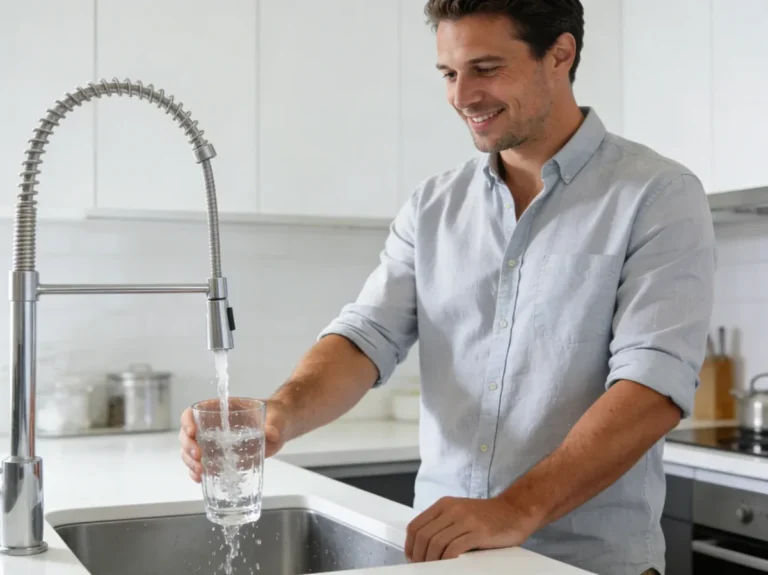
Turn on the kitchen tap and, most days, you probably don’t give much thought to what comes out. The water looks clear, smells normal, and fills your glass in a few seconds. That feels like enough. But water quality is a little more complicated than what we can see.
Even water that appears perfectly clean may contain naturally occurring minerals, treatment byproducts, particles, or other unwanted substances. Some are harmless at typical levels, while others can affect taste, plumbing, appliances, or long-term water quality. That’s why understanding what’s actually in your water can be surprisingly useful, especially if you rely on a private well or have noticed changes in taste, smell, or appearance.
The good news is that you don’t need to become a water chemist. A basic understanding of common water-quality issues can help you make smarter decisions about filtration and treatment.
Why Clear Water Isn’t Always Clean Water
One of the easiest assumptions to make is that clear water must be safe water. Unfortunately, appearance tells only part of the story.
Some substances dissolved in water are invisible. Others exist in concentrations too small to notice through sight or smell. Water can also pick up different materials as it travels through underground formations, municipal distribution systems, household plumbing, storage tanks, or well equipment.
That doesn’t mean every home has a serious water problem. Far from it. But it does mean testing is often more useful than guessing.
If your water suddenly tastes different, leaves stains on fixtures, develops an unusual odor, or seems cloudy after sitting for a while, those changes are worth investigating rather than simply working around.
Sediment: The Stuff You Can Sometimes See
Small particles in water can come from soil, sand, rust, pipe scale, or other material picked up along the way. This is commonly referred to as sediment.
In some homes, sediment is obvious. You might see tiny particles floating in a glass or notice a brownish tint when a faucet is first turned on. In other cases, the particles are so fine that they’re barely noticeable.
Sediment filtration is often used as the first stage of a broader water-treatment system because removing larger particles can help protect downstream filters and equipment. It can also make water look cleaner and reduce the gritty material that sometimes collects around faucet aerators.
For well owners, sediment can be especially frustrating. Changes in groundwater conditions, heavy rain, construction, or problems with a well system can sometimes increase the amount of particulate matter entering the water supply.
A simple filter may solve the issue in some cases. But if sediment keeps returning, it’s better to identify where it’s coming from instead of endlessly replacing filter cartridges.
Why Chlorine Is Added to Drinking Water
Municipal water treatment serves an important purpose: keeping public water supplies protected from harmful microorganisms. One of the most familiar treatment chemicals is chlorine, which has been used for decades to disinfect drinking water.
It works, but there’s a trade-off that many homeowners notice. Chlorinated water can sometimes have a swimming-pool-like smell or taste, particularly when the concentration is more noticeable.
For most people, the bigger complaint is comfort rather than safety. Nobody particularly enjoys making coffee that tastes faintly like a swimming pool.
Activated carbon filtration is commonly used to reduce chlorine and improve taste and odor. Depending on the filter design and water conditions, carbon can also reduce certain other unwanted substances.
However, not all carbon filters perform exactly the same way. Filter size, contact time, water flow, and replacement schedules all matter. A small filter that’s overloaded or overdue for replacement may not perform as well as expected.
What Do We Mean by Water Contaminants?
The word contaminants can sound alarming, but it covers a very broad range of substances. It may refer to physical particles, microorganisms, chemicals, metals, or other materials that aren’t wanted in drinking water.
Some contaminants occur naturally. For example, groundwater can pick up minerals and metals from surrounding rock and soil. Others may enter water through agricultural activity, industrial processes, aging infrastructure, or household plumbing.
Common water-quality concerns can include:
- Lead and other metals
- Nitrates
- Bacteria and other microorganisms
- Certain industrial chemicals
- Pesticide residues
- Excess minerals
- Sediment and suspended particles
- Treatment-related compounds
The important point is that there isn’t one universal filter that removes everything. Water treatment is more like solving a puzzle. First, you figure out what’s actually present. Then you choose technology designed for that particular problem.
Why Water Testing Should Come Before Buying Equipment
It’s tempting to walk into a store, choose a highly rated filter, and assume the problem is solved. Sometimes that works. Often, it’s not the smartest approach.
A water test gives you information about the starting point. Depending on the source and your concerns, testing may look at factors such as hardness, pH, iron, manganese, bacteria, nitrate, or other substances.
For municipal water, local water-quality reports can provide useful background information. Private well owners generally have more responsibility for understanding and testing their own water because well conditions can vary considerably from one property to another.
Testing also prevents a common mistake: treating a symptom instead of the cause.
For example, a bad taste could be related to chlorine, plumbing materials, minerals, or something else entirely. A filter designed for one issue may do very little for another.
Choosing the Right Filtration Approach
Once you know what you’re dealing with, the treatment options become easier to understand.
Sediment filters are useful for particles. Carbon filtration is widely used for taste, odor, and chlorine reduction. Water softeners are designed primarily to address hardness minerals such as calcium and magnesium. More specialized technologies can target particular chemical or microbiological concerns.
Some households use point-of-use filtration under the kitchen sink, especially when their main goal is improving drinking and cooking water. Others prefer whole-home treatment so that filtered water reaches showers, bathrooms, laundry areas, and appliances.
Neither approach is automatically better. It depends on the water source, the problem being addressed, household size, plumbing configuration, and budget.
And then there’s maintenance. Filters don’t work forever. They need attention, replacement, or cleaning according to the system design and actual water conditions. Ignoring maintenance can turn a good filtration system into an expensive piece of equipment sitting quietly under the sink.
Small Changes Can Tell You a Lot
Pay attention to your water. It sounds simple, but it matters.
If faucets develop recurring stains, water pressure changes, an odor appears, or a glass of water suddenly tastes different, don’t automatically assume it’s just “old pipes” or a temporary quirk.
Sometimes the cause is straightforward. Other times, a professional inspection or laboratory water test is the sensible next step.
The goal isn’t to chase every possible impurity or spend money on the most complicated treatment system available. Good water treatment is about matching the solution to the actual problem.
A Better Way to Think About Your Water
Water quality isn’t something you can judge entirely by looking at a glass. Some issues announce themselves with cloudy water, unpleasant smells, or visible particles. Others don’t.
Understanding common concerns such as sediment, chlorine, hardness, and dissolved substances gives homeowners a much better starting point. More importantly, testing helps separate real problems from assumptions.
Clean, pleasant water shouldn’t require guesswork. Start by finding out what’s in your water, understand what needs attention, and then choose treatment that makes sense for your home. Sometimes the best solution is surprisingly simple. And honestly, that’s usually better than buying equipment you don’t need.